Armenian Legions in Roman Army
Legio Prima (I) Armeniaca, Legio Secunda (II) Armeniaca

Legio Prima (I) Armeniaca – Armenian First Legion

“Legio Armeniaca” translated from Latin as “Armenian Legion” and “prima” as “first”. Armenian First
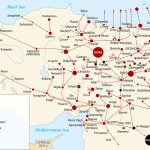
Legion was one of the later period Roman empire legions. This Legion is mentioned in the late-antique text known as Notitia Dignitatum. Most Likely that Armenian First Legion was formed in 2nd or 3rd centuries A.D. in Western part of Armenia and had mission to protect that Armenian lands from intrusion. It should first have been the garrison of Armenian lands which had been under the control of Roman Empire.
Armenian First Legion took part in the ill-fated Persian campaign of the emperor Julianus Apostata in 363.
I think Armenian First Legion wasn’t destroyed in 363, and later came a part of Byzantine army.
Legio Secunda (II) Armeniaca – Armenian Second Legion

“Legio Armeniaca” translated from Latin as “Armenian Legion” and “Secunda” as “Second”. Armenian
Second Legion like Armenian First legion was one of the later period Roman empire legions. This legion also mentioned in the Notitia Dignitatum. Armenian Second Legion probably was created at the end of 3rd century or in the beginning of 4th century. Armenian Second legion had a permanent camp in one of the Northern provinces of the Orient. This legion built a camp in Satala. Armenian Second legion is furthermore mentioned in the year 360 as a part of the garrison of Bezabda (anciently called Phoencia) at the upper Tigris. In Bezabda Armenian Second Legion served together with Legions Parthica and II Flavia. In 390 Bezabda were taken by the Persians and a terrible bloodbath was held under the inhabitants and garrison. Nevertheless the legion seems to have survived this battle, because it appears in Notitia Dignitatum which have been written in 5th century.
Later on Armenian Second legion became a part of Byzantine army.
Evolution of the Roman Army

The Roman army (exercitus) did not start out as the superlative fighting machine that came to dominate Europe to the Rhine, parts of Asia, and Africa. It began like the part-time Greek army, with farmers returning to their fields after a quick summer campaign, then changed into a professional organization with long terms of service far from home. The Roman general and 7-time consul Marius is considered responsible for the change of the Roman army into its professional form. He gave the poorest classes in Rome the opportunity to be career military, gave land to veterans, and changed the composition of the legion.
Recruitment of Roman Soliders:
The Roman army changed over time. The consuls had the power to recruit troops, but in the last years of the Republic, provincial governors were replacing troops without the approval of the consuls. This led to legionaries loyal to their generals rather than Rome. Before Marius, recruitment was limited to citizens enrolled in the top 5 Roman classes. By the end of the Social War (87 B.C.) most of the free men in Italy were entitled to enlist and by the reign of Caracalla or Marcus Aurelius, it was extended to the entire Roman world. From Marius on there were between 5000 and 6200 in the legions.
Legion Under Augustus:
The army of Augustus consisted of 25 legions (according to Tacitus). Each legion consisted of about 6000 men and a large number of auxiliaries. Augustus increased the time of service from 6 to 20 years for legionaries. Auxiliaries (non-citizen natives) enlisted for 25 years. A legatus, supported by 6 military tribunes, led a legion, composed of 10 cohorts. 6 centuries made a cohort. By the time of Augustus, a century had 80 men. The leader of the century was the centurion. The senior centurion was called the primus pilus. There were also about 300 cavalry attached to a legion.
Legion Names:
Legions were numbered. Additional names indicated the place where the troops were recruited, and the name gemella or gemina meant the troops came from the merger of two other legions.
Punishments:
One way to ensure discipline was the system of punishments. These could be corporal (flogging, barley rations instead of wheat), pecuniary, demotion, execution, decimation, and disbandment. Decimation meant one in 10 soldiers in a cohort was killed by the rest of the men in the cohort by clubbing or stoning (bastinado or fustuarium). Disbandment was probably used for mutiny by a legion.
Siege Warfare:
The first great siege war was waged by Camillus against the Veii. It lasted so long he instituted pay for the soldiers for the first time. Julius Caesar writes about his army’s sieges of towns in Gaul. Roman soldiers built a wall surrounding the people to prevent supplies from getting in or people from getting out. Sometimes Romans were able to cut off the water supply. Romans could use a ramming device to break a hole in the city walls. They also used catapults to hurl missiles inside.
The Roman Soldier:
De Re Militari, written in the 4th century by Flavius Vegetius Renatus, includes a description of the qualifications of the Roman soldier (from the Stout article): “Let, therefore, the youth who is to be chosen for martial tasks have observant eyes, hold his head up, have a broad chest, muscular shoulders, strong arms, long fingers, not too extended a wait measure, lean hams, and calves and feet not distended with superfluous flesh but hard and knotted with muscles. Whenever you find these marks in the recruit, do not be troubled about his height [Marius had set up 5’10 in Roman measurement as the minimum height]. It is more useful for soldiers to be strong and brave than big.”
Roman soldiers had to march at an ordinary pace of 20 Roman miles in 5 summer hours and at a fast military pace of 24 Roman miles in 5 summer hours carrying a 70 pound backpack.
The soldier swore an oath of loyalty and implicit obedience to his commander. In war, a soldier who violated or failed to carry out the general’s order could be punished by death, even if the action had been advantageous to the army.
SOURCES
- Notitia Dignitatum
- ancienthistory.about.com
- armenian-history.com